Budapest is easy to visit and has three or four rules that are worth knowing before you land rather than after.
Money
The currency is the forint, not the euro, and prices in euro are usually a bad deal. Cards are accepted almost everywhere, including on transport. Decline the offer to be charged in your own currency at a card machine or an ATM — that is dynamic currency conversion and it costs you every time. Avoid the exchange booths at the airport and around the tourist streets; the rates in ordinary city-centre offices are markedly better.
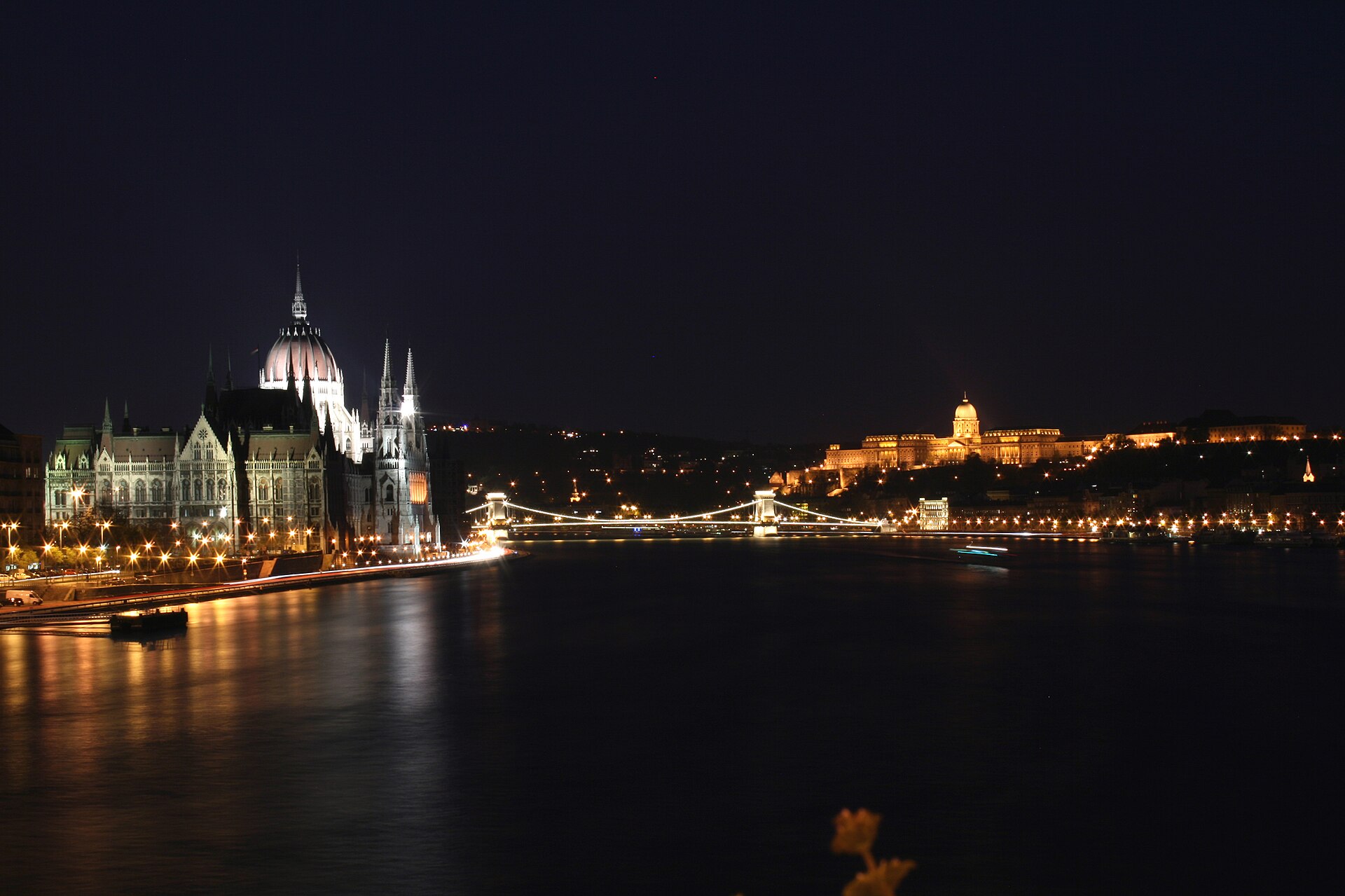
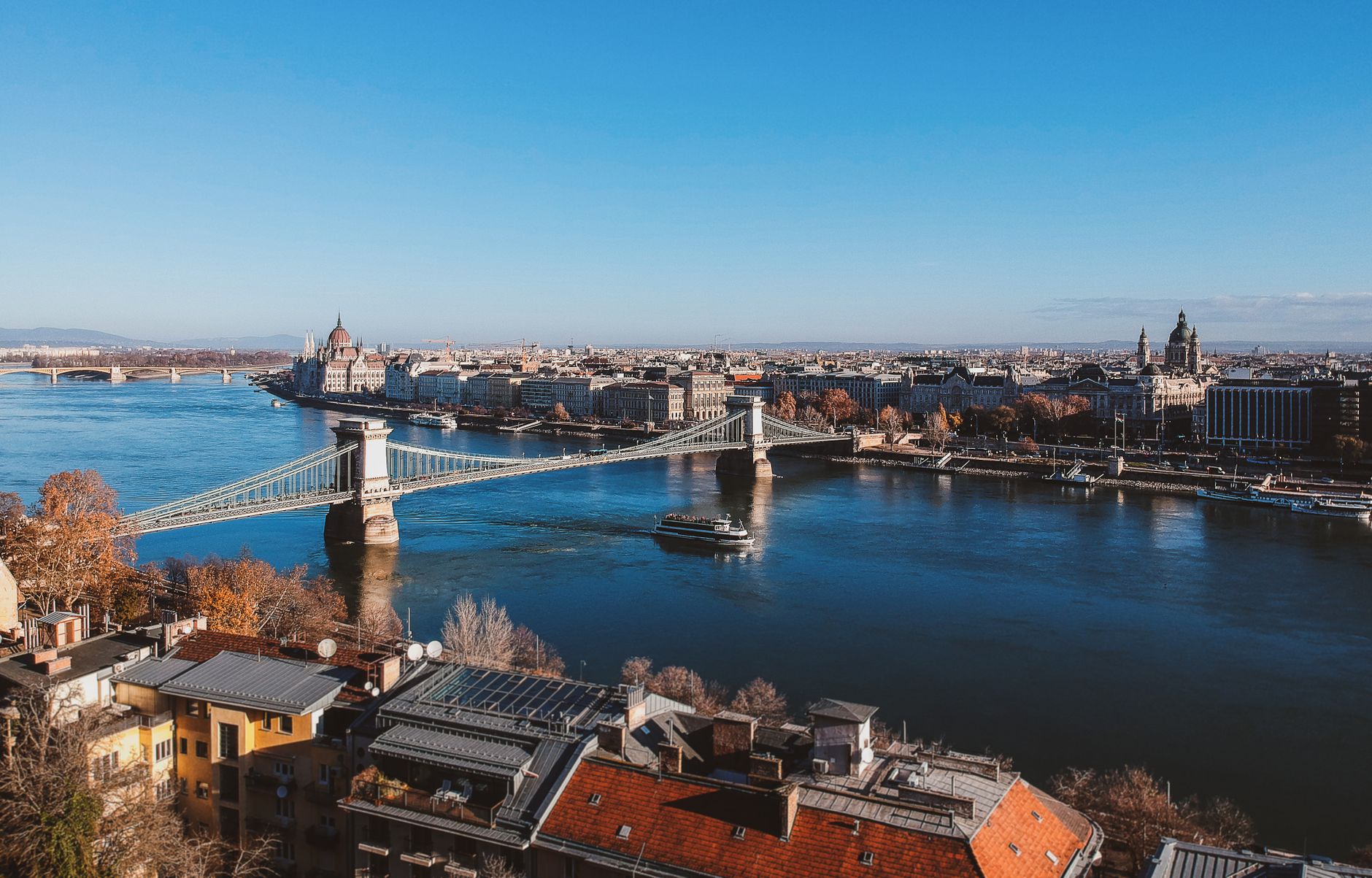
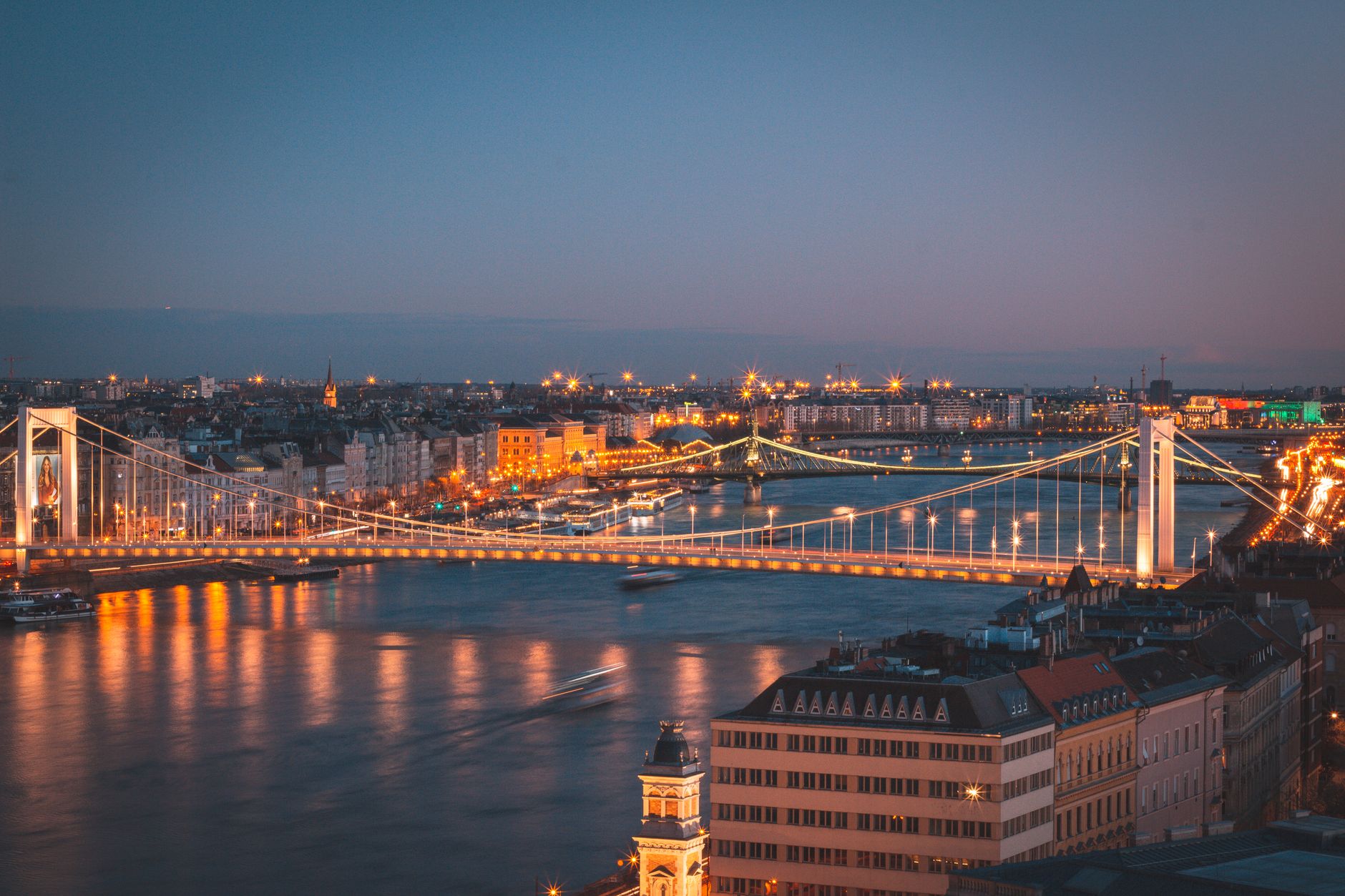
The city sits in a river basin, which is why the summer heat holds. Photograph by Karelj, Wikimedia Commons, Public domain
What is shut, and when
The Great Market Hall closes on Sunday. The Dohany Street Synagogue and the Jewish Museum close on Saturday and on Jewish holidays. Most state museums close on Monday. Between those three rules you can lose a day without noticing, so check them against your itinerary before you book anything.
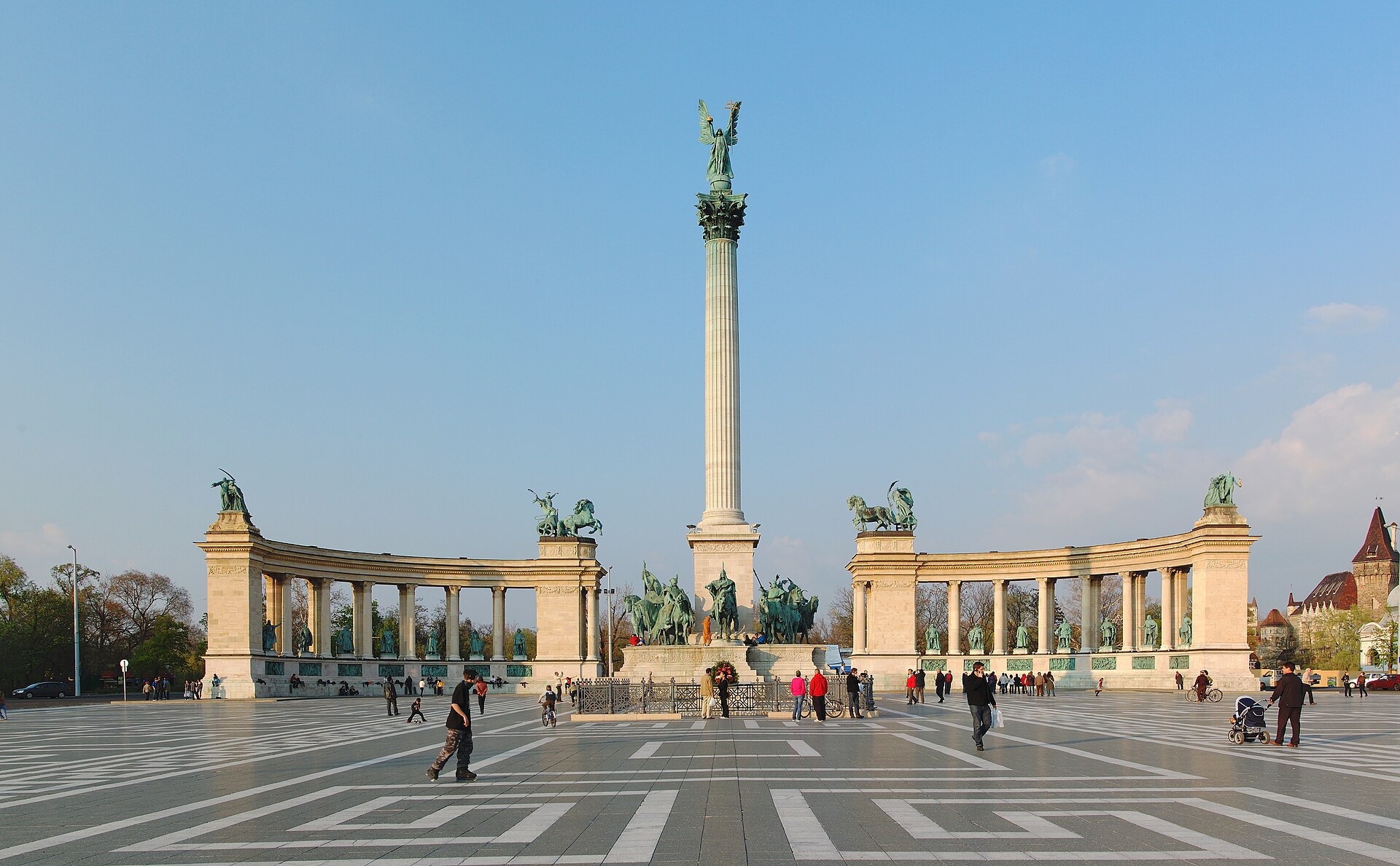
Heroes' Square is free at any hour — the museums beside it are not. Photograph via Wikimedia Commons, CC BY-SA 3.0
The crowd calendar
Summer is busiest and hottest, and the city sits in a basin so the heat holds. Late spring and early autumn are the best compromise. Winter is genuinely cold, and it is also when the outdoor thermal pools are at their best and the Christmas markets are on. August has the Sziget festival, which fills accommodation across the city.
Checked on 4 September 2026 against published sources. Fares, hours and closing days change without much warning — confirm before you travel.
Margaret Island is free, car-free, and the answer to a hot afternoon. Photograph by Nikolai Karaneschev, Wikimedia Commons, CC BY 3.0
Budapest’s tap water meets EU drinking standards and is safe straight from any faucet, including hotel rooms and public drinking fountains. Public toilets are the harder problem: free ones are scarce, paid ones usually want coins, and the right fallback depends entirely on where you are standing when you need one. Is Budapest’s tap water … Read more
Budapest’s three main train stations all run left-luggage services, staffed or automated, but they are not interchangeable. Locker size, overnight access and security closures differ by building. For an oversized suitcase, an overnight gap between checkout and a late flight, or travel on a public holiday, a city-center locker or a hotel often beats the … Read more
Is the Budapest Card worth it? The Budapest Card earns back its price only for a narrow kind of trip: two or three days, several paid museums a day, with transport already covered. For a bath-focused visit, or a slower one-sight-a-day trip, separate tickets usually cost less. Museums are often free with the card. Baths … Read more
Budapest does not get crowded gradually across a vague “summer season.” It spikes on specific, repeatable dates: the second week of August for Sziget Festival, late July for the Hungarian Grand Prix, August 20th for National Day fireworks, and the stretch from November 1 to December 31 when the Christmas markets run. Knowing these dates … Read more
A Budapest bill sometimes already includes service, and the printed Hungarian wording tells you so. Look for a line reading “Szervizdíj” or “Felszolgálási díj” (both mean service charge) followed by a percentage. If that line is there, the charge is already added. If it is not there, nothing has been added, and a tip is … Read more
Hungary observes eleven public holidays a year, set out in the national Labour Code, and on each one banks, government offices, post offices, and most museums close exactly as they do on a Sunday. Thermal baths typically stay open. Public transport mostly runs a Sunday timetable. One additional wrinkle, unique to Hungary, reshuffles some Saturdays … Read more
Change money at a bank branch, a post office counter, or a bureau that prints one rate with no footnotes. Avoid any board with a second, smaller rate tier, and never accept an exchange at the airport or on Váci utca without checking the fine print first. The real risk in Budapest is not obvious … Read more
A Hungarian card terminal or ATM that offers to charge in dollars, pounds or euros instead of forints is offering dynamic currency conversion, or DCC. The merchant’s payment processor, not your own bank, sets that exchange rate. It is built to run worse than the rate your card network would use. Decline it. Choose forints … Read more
Monday closes Budapest’s big state museums: the Hungarian National Museum, the Museum of Fine Arts, the Hungarian National Gallery. It does not close the Great Market Hall, the Dohány Street Synagogue, Parliament’s guided tours, or any thermal bath. The day needs a reroute, not a cancellation. Why do so many Budapest museums close on Monday? … Read more
On a Sunday in Budapest, most independent shops are closed and the Great Market Hall is shut entirely. State museums run their normal hours, because Monday is their closed day, not Sunday. Supermarkets split along a legal and practical line that has nothing to do with brand loyalty and everything to do with floor space. … Read more
About what you read here. Everything on Access Budapest is general information and our own editorial opinion. We research carefully and we say when the evidence is unclear, but we can be wrong, things change, and no article can know your particular situation. Please do your own research and make your own judgement rather than treating anything here as the final word. Prices, products and specifications around the topics we cover change constantly, and what suits one person will not suit another. Check current details yourself, and where a decision involves real money, safety or something you cannot undo, it is worth confirming with a qualified professional before you act.
We do not book anything. Access Budapest is a guide. It sells nothing, takes no bookings or reservations, handles no payments, and holds no tickets, rooms or seats. Some links here lead to travel companies, and some of those are affiliate links that may earn this site a commission at no extra cost to you. Any booking you make is a contract between you and that company, under its own terms, prices and cancellation rules. We are not a party to it and have no responsibility for it — including availability, prices, changes, cancellations, refunds or anything that goes wrong on the trip. Check the details with the company before you pay.