Why does a Saturday ticket cost more than a Tuesday one?
A Saturday ticket costs more because several charges stack, not because of one weekend surcharge. The base admission tier rises. Cabins get scarcer and pricier at busy hours. Several discount categories vanish on weekends entirely. Each layer is separate, and a visitor who understands them can dodge most without avoiding Saturday at all.
What is actually stacking on top of the weekend price?
Competing guides usually say weekend tickets cost “a bit more.” That flattens four distinct line items into one vague number. A reader can’t tell which one applies to their plan, or which one they could simply route around.
- Base ticket tier — most Budapest baths run a two-tier calendar, weekday and weekend, built into the published price list itself.
- Cabin versus locker — a private changing cabin costs more than a locker on any day, and that gap does not shrink on Saturday.
- Peak-hour cabin scarcity — cabins are limited in number. On a Saturday morning they often sell out, pushing later arrivals toward the pricier remaining stock or none at all.
- Reduced discount availability — student, senior, and some combined-ticket rates are frequently weekday-only, or capped in weekend quantity.
Stack all four and the Saturday total can look dramatically higher than Tuesday’s. Isolate them, and most of that gap comes from just two of the four.
How does the weekday/weekend base tier actually work?
Most of the larger municipal baths — Széchenyi, Gellért, Rudas — price a single day ticket on a two-band calendar. Monday through Friday sits in one band. Saturday, Sunday, and public holidays sit in the other.
This is not dynamic pricing that shifts hour by hour. It is a fixed calendar rule set once a year. The baths’ own tariff tables, published on each bath’s official site, list the two bands side by side.
The gap between them is usually modest in isolation — often a few hundred forints. It only becomes a meaningful sum once cabin and scarcity charges are added on top.

What does a cabin add, and why is it pricier on Saturday?
A cabin is a private changing space instead of a shared locker area. That difference exists on every day of the week.
What changes on Saturday is supply. Cabin numbers are physically fixed by the building. Demand is not. A visitor arriving after mid-morning on a weekend often finds cabins already reserved by earlier arrivals, and some baths respond by limiting cabin sales once a threshold is reached.
The result isn’t a listed “Saturday cabin surcharge.” It’s scarcity behaving like one. Arrive early enough, and the cabin price itself is identical to a weekday’s. What a visitor is really weighing is described in more detail in our piece on what a cabin buys you over a locker at a Budapest bath.
.jpg)
Why do discount tickets vanish on weekends?
Discount categories — student rates, some senior rates, certain bundled or off-peak combinations — are administrative choices, not physics. Operators set them to smooth weekday demand.
A weekday morning at a large bath draws fewer visitors than a Saturday afternoon. Discounting that quieter window costs the operator little and fills otherwise empty capacity. Saturday needs no such incentive. The crowd shows up regardless.
So the discount simply isn’t offered, or is capped, on the busiest days. That’s not a price rising. It’s a price staying at full rate while the weekday alternative disappears.

Can a visitor dodge the Saturday premium without switching days?
Largely, yes. Three of the four factors above are avoidable through timing and ticket choice, not day selection.
- Arrive at opening, before cabin stock runs out — this removes the scarcity charge entirely.
- Choose a locker over a cabin if a private changing space isn’t essential — this removes the cabin gap.
- Check whether a discount category applies on the specific day planned, since some resume by early evening even on weekends.
Only the base weekend tier is genuinely fixed. It applies from the moment the calendar flips to Saturday, regardless of arrival time. That’s the one line item a visitor cannot plan around, short of visiting on a weekday.
Which bath makes this difference sharpest?
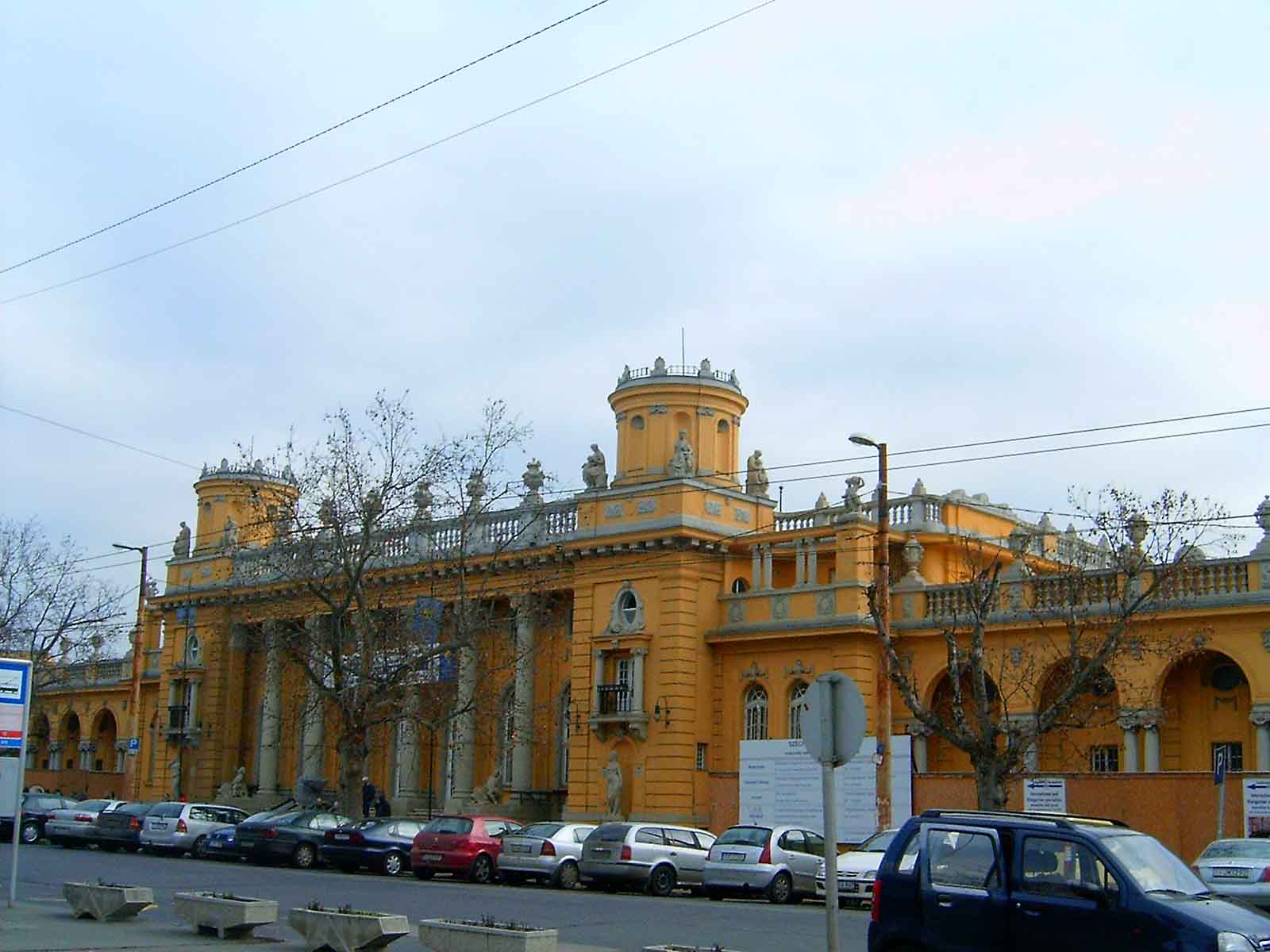
Cabin scarcity matters most at baths with heavy weekend footfall and a comparatively small cabin allocation relative to visitor numbers. Széchenyi, in Városliget park, draws especially large Saturday crowds, per visitor volume widely reported by Hungarian tourism coverage. Gellért’s cabin stock is smaller in absolute terms, so it can sell out earlier in the day even with fewer total visitors.
Neither bath publishes a “scarcity fee” as such. The effect is observed at the ticket desk, not on the tariff sheet. For a fuller comparison of what each complex actually offers a visitor, see Széchenyi or Gellért: which Budapest bath fits your day.
Where should a reader check the actual current numbers?
Every figure above describes a structure, not a current forint amount, because that number changes and this page cannot track it in real time. Each bath’s own site — Széchenyi’s, Gellért’s, Rudas’s — publishes its current tariff table, broken down by day and ticket type. That is the only reliable source for what a ticket costs this month.
The Thermal Baths & Spas archive on this site collects further breakdowns of how individual baths structure entry, cabins, and circuits.
Details on how this page was researched, and what it does and doesn’t claim firsthand, are set out on the About page. What the site collects from a reader visiting this article is described in the privacy policy.
Access Budapest is an independent guide written from published, checkable sources. We have not visited the places described here and we do not publish personal recommendations or invented ‘local favorites’ — where something is singled out as notable, we say who says so. Opening times, fares, closures and prices change at short notice, so treat everything here as a starting point and confirm with the museum, operator or venue directly before building a day around it. We give no advice on visas, insurance, health or safety; use your own government’s official guidance for those.
Featured image: Photo by Pierre Bona, source, CC BY-SA 3.0
