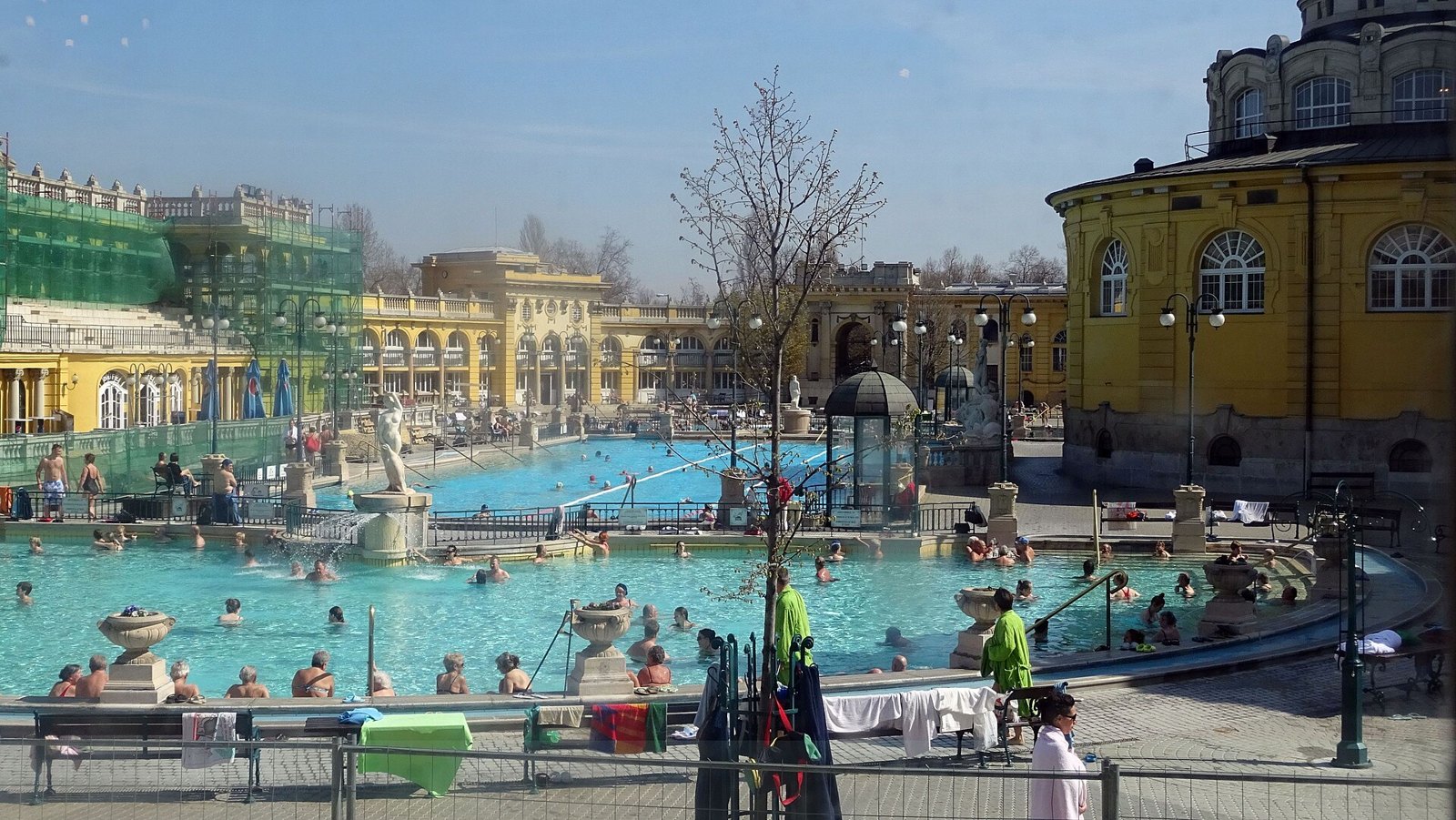
What actually separates Rudas, Lukács and Veli Bej from Széchenyi and Gellért?
Scale and schedule, mostly. These three baths are smaller, run different hours for different groups, and are used day to day by people who live nearby rather than by tour groups. Rudas keeps a partial single-sex timetable, Lukács splits its swimming pool from its thermal pool, and Veli Bej requires a booked time slot. That structure, not atmosphere, is what determines whether a visit works.
How does Rudas split its day between single-sex and mixed bathing?
Rudas Gyógyfürdő sits at the foot of Gellért Hill in District I, on the Buda bank near Elizabeth Bridge. Its central octagonal pool and dome date from the 16th-century Ottoman occupation of Buda, when the building was constructed as a bathhouse and later expanded under Habsburg and modern ownership. The bath still runs a mixed schedule of hours.
Some daytime blocks are reserved for single-sex bathing, where swimwear is optional inside the historic pools. Other hours, including all weekend hours, are mixed, and swimwear is required throughout. Which days fall into which category has shifted over the years and differs from a fixed weekly pattern many older guides still repeat.
The bath is operated by Budapest Spas, the municipal company that runs the city’s public thermal baths. Its own schedule pages are the only reliable source for which hours are currently single-sex and which are mixed — check the current breakdown there before planning a visit around it.
What’s different about Lukács — and why does it need two tickets?
Lukács is in District II, on Frankel Leó út, a short walk from Margaret Bridge on the Buda side. The complex has functioned as a bath since at least the medieval period, with the current buildings largely 19th and 20th century. It sits under the same municipal operator as Rudas.
Lukács has two distinct facilities under one roof. The swimming pool section, or uszoda, holds lane pools used for lap swimming, mostly by locals doing lengths before or after work. The thermal pool section holds the mineral pools, saunas and steam rooms typically associated with a soak rather than a swim.
These are not automatically the same ticket. A pass covering the swimming pool does not necessarily include the thermal side, and vice versa — the exact ticket structure and what each covers is set by the operator and should be confirmed on its site rather than assumed from a previous visit.

_(13227577465).jpg)
Why does Veli Bej make you book a specific time?
Veli Bej, also on the Buda side in District II near Lukács, is the smallest of the three by a wide margin. It is a restored 16th-century Ottoman bathhouse, reopened after renovation, and its pools are compact compared with Rudas or Lukács.
Because capacity is limited, Veli Bej sells entry as a timed slot rather than an open-ended day ticket. A visitor books a specific window in advance through the operator’s booking system and is expected inside during that window, not whenever the day allows.
That single fact changes how it should be planned. Turning up without a reservation risks being turned away if the slot is full, which is a real possibility on weekends.
Which bath actually fits your reason for going?
The three baths solve different problems. Matching purpose to structure, rather than reputation, is the useful question here.
- An early lap swim before work: Lukács, using the uszoda’s early opening slot, not the thermal side. A lane-swim ticket is the relevant product, not a thermal day pass — see how a cabin or locker changes what that ticket includes in this comparison of cabin and locker access.
- A mineral soak on medical advice for a joint or muscle complaint: Rudas or Lukács thermal side, during a weekday daytime block rather than the weekend mixed hours, when pools are typically less crowded. This is a scheduling observation, not medical guidance — any decision about treating a specific condition belongs with a doctor, not this page.
- A quiet weekend soak with a partner: Veli Bej, booked well ahead for a weekend timed slot. Its small size and reservation system cap numbers in a way the larger baths cannot.
Each row depends on a schedule that the operator, not this page, controls and updates.

_(13227889514).jpg)
Why won’t this page tell you what a ticket costs?
Because a printed number goes stale fast. Bath pricing in Budapest generally depends on the day of the week, the ticket type — locker, cabin, or a specific circuit — and sometimes the time of day. This site has already set out how the weekday-versus-weekend structure works for the larger baths, and the same underlying logic applies here.
Rudas, Lukács and Veli Bej publish their current fares and reservation fees on the operator’s own site. That is the only place a number is worth trusting on the day of a visit.
Where are they, and how do you get there?
All three sit on the Buda side of the Danube. Rudas is in District I, at the base of Gellért Hill. Lukács and Veli Bej are both in District II, a short walk apart near Margaret Bridge. None is directly on a metro line; each is reached by tram or bus from central Pest, which takes longer than the walk-in convenience of Széchenyi or Gellért.
For a broader sense of how these three compare with the city’s larger, better-known baths, see this guide to Széchenyi and Gellért, and the wider Thermal Baths and Spas archive for what to pack, per this checklist, before any of them.
Location and historical detail here draw on the Budapest tourism board’s own reference pages at budapestinfo.hu. Details on how this site sources and checks its material sit on the About page; what the site collects from readers is on the privacy policy.
Access Budapest is an independent guide written from published, checkable sources. We have not visited the places described here and we do not publish personal recommendations or invented ‘local favorites’ — where something is singled out as notable, we say who says so. Opening times, fares, closures and prices change at short notice, so treat everything here as a starting point and confirm with the museum, operator or venue directly before building a day around it. We give no advice on visas, insurance, health or safety; use your own government’s official guidance for those.
Featured image: Photo by VillageHero from Ulm, Germany, source, CC BY-SA 2.0
.jpg)