Winter changes three things at a Budapest thermal bath: the air-to-water temperature gap widens sharply, the walk between changing area and pool becomes a real decision rather than a stroll, and steam thickens enough to cut visibility across the outdoor pools. The water itself does not change. It is heated to the same range year-round.
What actually changes at a Budapest furdo in winter?
The pools stay at their usual temperature, generally somewhere in the 30s Celsius depending on which basin. What changes is the air around them. In January the gap between water and outdoor air can exceed 30°C (54°F), and that gap is what produces the steam, the cold walk, and the need for a plan.
Indoor pools and saunas are unaffected. The outdoor pools, and the open-air stretch of pool deck at Széchenyi and Gellért, are where winter actually shows up.
How cold does the walk between locker room and pool get?
Cold enough that hesitating is the mistake, not the cold itself. Budapest’s winter days often sit below freezing from December through February, according to the Hungarian Meteorological Service, which publishes long-run climate normals for the city.
A wet body loses heat fast in moving air. The fix is not more clothing. It is a shorter exposed distance and a faster pace.
The indoor-outdoor transition, step by step
This is the part every generic guide skips. The sequence below is the practical shape of the transition, not a list of warnings.
| Step | What to do | Why |
|---|---|---|
| 1. Dry point | Leave robe and towel on the hooks or shelf directly beside the exit to the outdoor pool deck, not back at your locker. | A dry towel waiting at the door means you are never more than a few steps from getting warm again. |
| 2. Commit to the door | Walk straight through, at a normal pace, without pausing on the threshold. | Standing still in wet swimwear in cold air is where most of the heat loss happens. |
| 3. Enter the water immediately | Go straight down the steps into the outdoor pool rather than pausing at the edge. | Submerged skin is warm again within seconds; exposed skin above the waterline is not. |
| 4. Protect the hair | Keep hair under the surface, or wear a bath cap, and avoid long stretches with wet hair exposed to the air. | Wet hair held above sub-zero air can stiffen surprisingly fast. As a rough, weather-dependent guide, ten to fifteen minutes of exposure is often enough for strands to start icing. |
| 5. Return the same way | Time your exit for before you feel cold, not after, and go straight back through the same door to the dry towel. | The return trip is the second cold moment. Treat it with the same urgency as the first. |
None of this needs to be dramatic. It needs to be quick and decided in advance, which is the whole point of laying it out as steps.

.jpg)
Which route gets you back to warm water fastest at Széchenyi or Gellért?
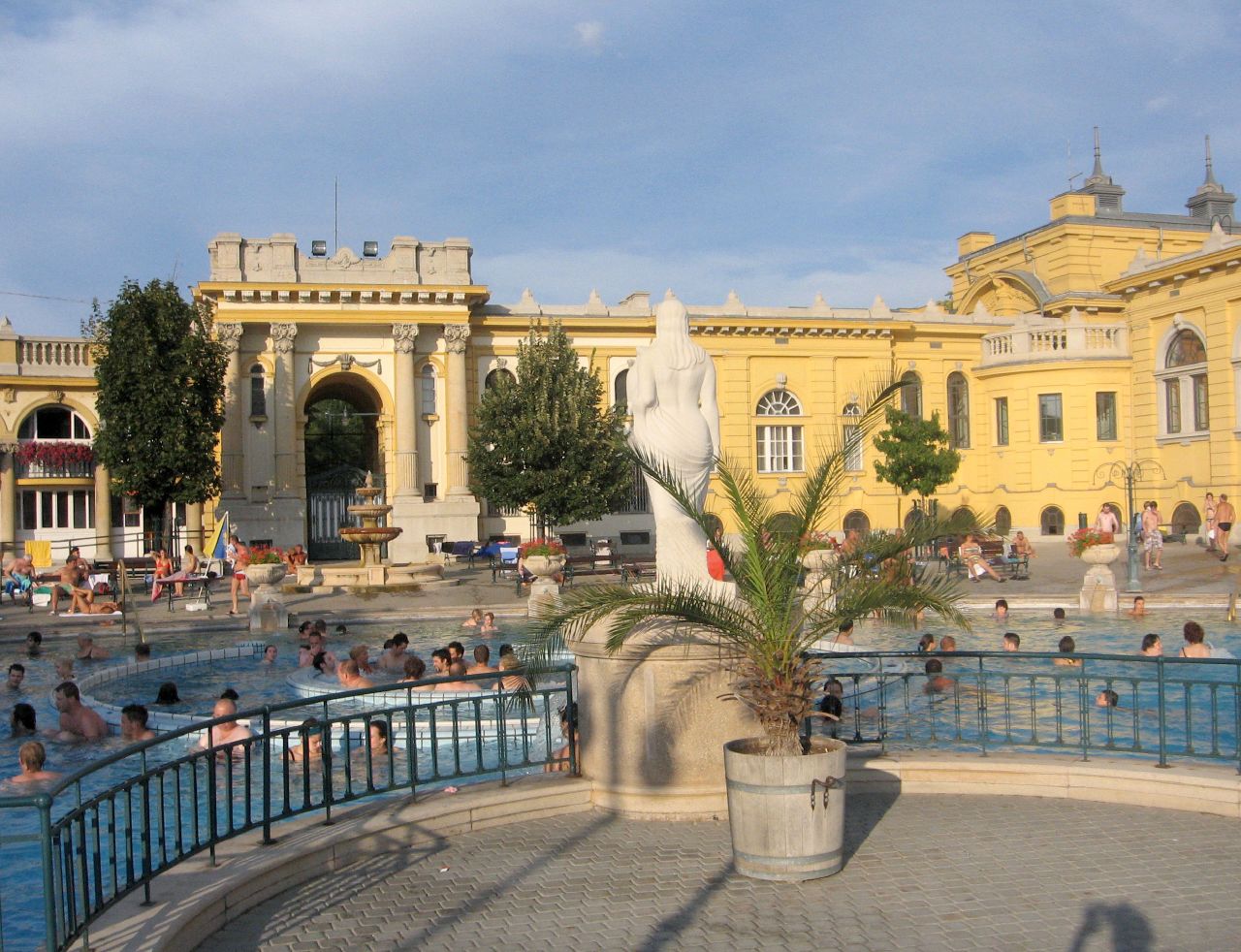
At Széchenyi, the two indoor thermal pool halls flanking the main outdoor pool open onto the pool deck through wide archways. Bathers can move from an indoor thermal pool straight into the outdoor pool through that opening, without going back through the changing corridor at all. That is the shortest indoor-outdoor loop the building offers.
Gellért’s layout separates its sections more clearly. Indoor and outdoor pools connect through the locker-room corridor rather than a direct archway, so the transition there generally takes longer. A comparison of the two buildings, and what kind of day each suits, is covered in a separate piece on Széchenyi versus Gellért.
Either way, the principle is the same: know your dry point before you get wet, and use the shortest physical route the building actually offers.
Does the steam actually block visibility?
Yes, noticeably. Thick steam sits low over the outdoor pools on cold mornings, sometimes reducing visibility across a pool to a few meters. It thins as the air warms toward midday, so the density of steam roughly tracks the daily temperature curve rather than staying constant.
This is cosmetic, not hazardous, but it does mean poolside signage and lane markings can be harder to see. Move deliberately near steps and pool edges.


Does winter change the crowd, and does it change what you pay?
Winter tends to thin the crowd, especially on weekday mornings, since coach tours and casual day-trip visitors drop off outside the warmer months. Weekends still draw a mixed crowd of residents and visitors.
What determines the price at any Budapest bath is not the season directly. It is the day of the week, and whether the ticket covers a locker or a cabin. That structure, and why Saturday costs more than Tuesday at the same bath, is explained in a dedicated article on why a Budapest bath costs more on a Saturday. Current figures are published only by the operator, Budapest Gyógyfürdői Zrt., on the ticket pages for each bath, and should be checked there rather than assumed from an older source.
Cabins matter more in winter than in summer, simply because changing in a private space is less of a scramble when the air outside is cold. The trade-offs are set out in a separate piece on what a cabin buys you over a locker.
What should actually go in the bag in winter?
The core kit does not change with the season. A padlock, flip-flops, and a swimsuit are needed year-round. Winter adds a few items worth packing deliberately.
- A bath cap or old swim cap, to protect hair on the outdoor-to-indoor walk.
- A second, dry towel kept specifically for the return through the cold door.
- Warm, easy-to-put-on layers for after, since dressing with cold hands takes longer than expected.
A full packing rundown, covering what is worth bringing and what the baths already provide, is in the guide on what to actually bring to a Budapest thermal bath. Whether an add-on massage or package is worth booking is a separate question, addressed in the piece on whether Budapest bath packages and massages are worth it.
Are the quieter baths a better winter choice?
For some readers, yes. Smaller baths with less outdoor pool area, such as Rudás or Lukács, involve a shorter outdoor stretch by design, since more of the circuit is indoors. That can make winter visits simpler logistically, even without any change in price or hours.
These smaller, less tourist-heavy baths are covered in a separate guide on the quieter Budapest baths locals use. The wider archive of bath-specific articles, including seasonal and practical pieces, sits under Thermal Baths & Spas.
None of the above depends on temperature figures holding steady. The Meteorological Service’s published normals are for planning what kind of winter day to expect, not a guarantee for any single visit. Readers checking exact conditions before travel can consult the agency’s own site directly, as with the City of Budapest’s official municipal site for general city information.
Access Budapest is an independent guide written from published, checkable sources. We have not visited the places described here and we do not publish personal recommendations or invented ‘local favorites’ — where something is singled out as notable, we say who says so. Opening times, fares, closures and prices change at short notice, so treat everything here as a starting point and confirm with the museum, operator or venue directly before building a day around it. We give no advice on visas, insurance, health or safety; use your own government’s official guidance for those.
Featured image: Photo by Random photos 1989, source, CC BY-SA 4.0
